Charts & candlesticks
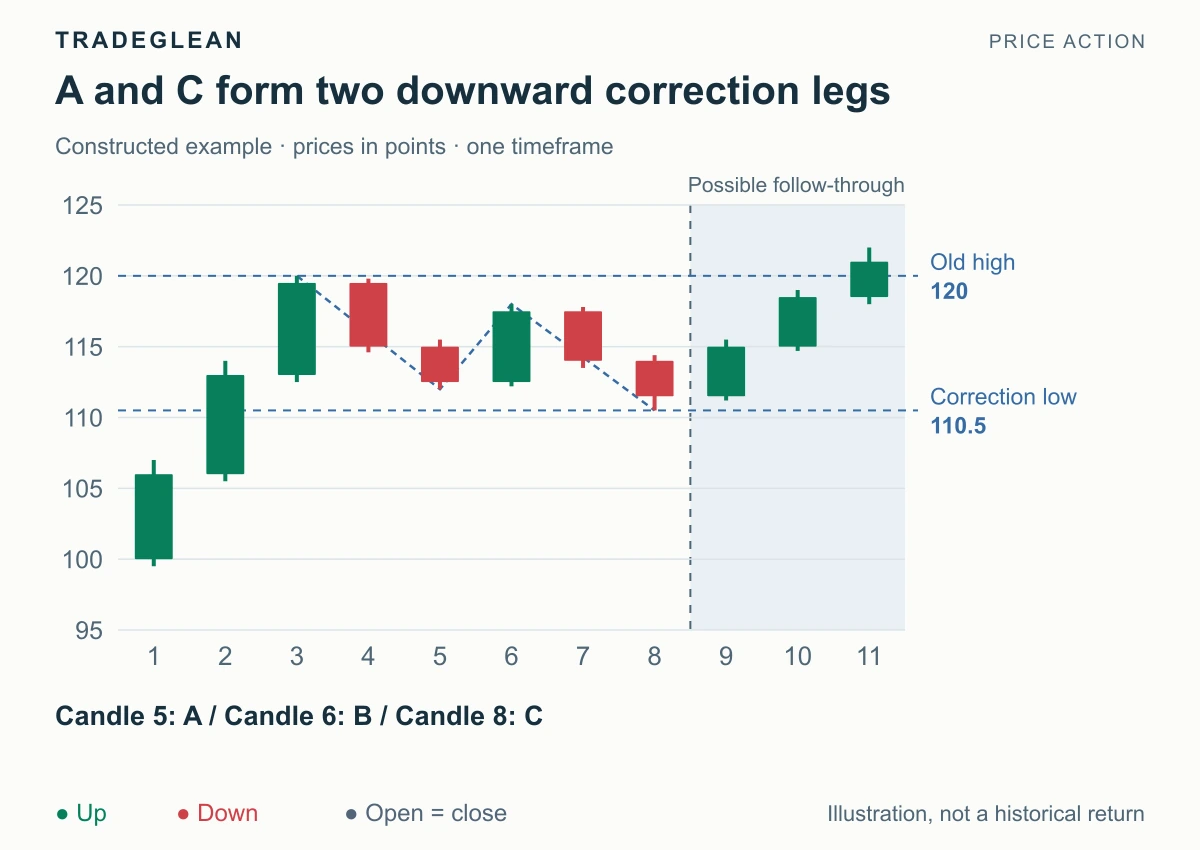
Complex Pullbacks and Two-Legged Corrections
Identify a complex pullback, compare it with a simple correction or reversal, and read ABC legs, confirmation levels, and remaining reward versus risk.
Read articleExplore the articles connected by this topic.
22 articles
Identify a complex pullback, compare it with a simple correction or reversal, and read ABC legs, confirmation levels, and remaining reward versus risk.
Read article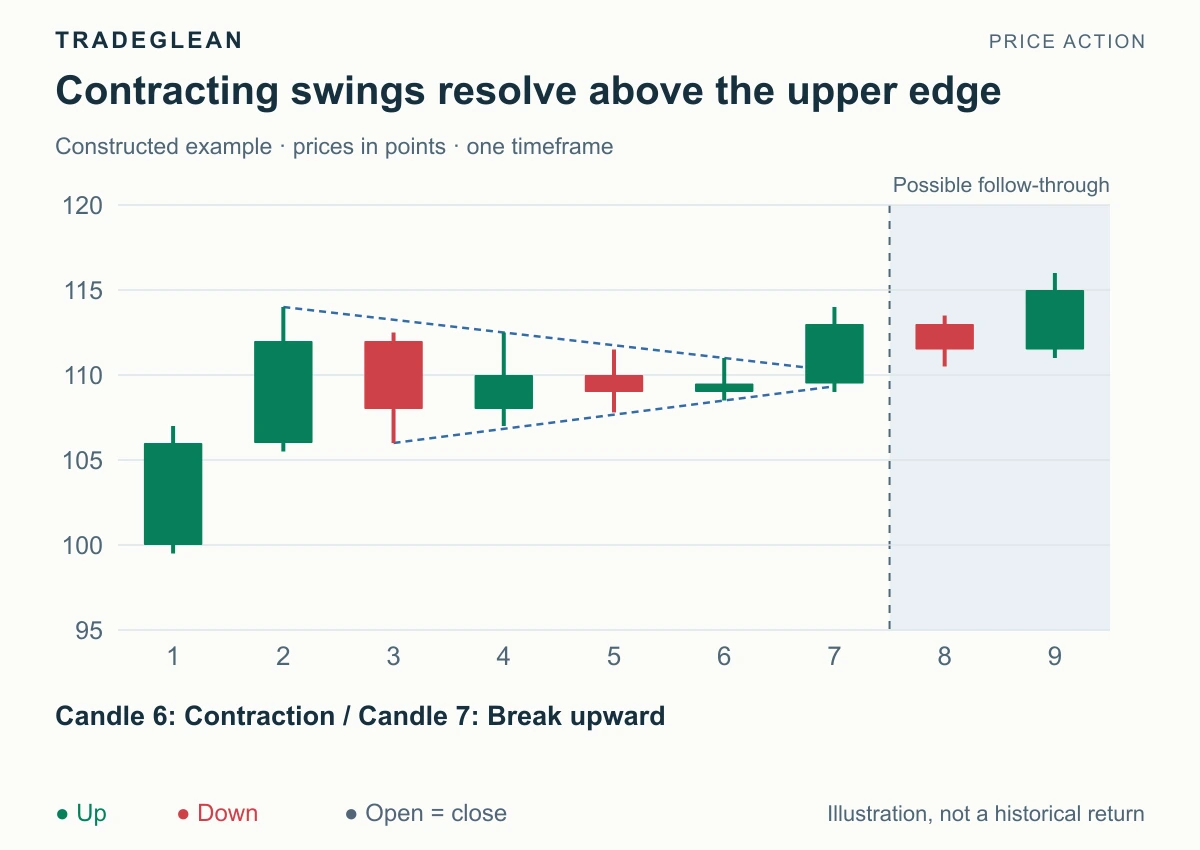
Distinguish contracting and expanding price structures, identify their actual boundaries, and read the confirmed breakout without guessing from the outline.
Read article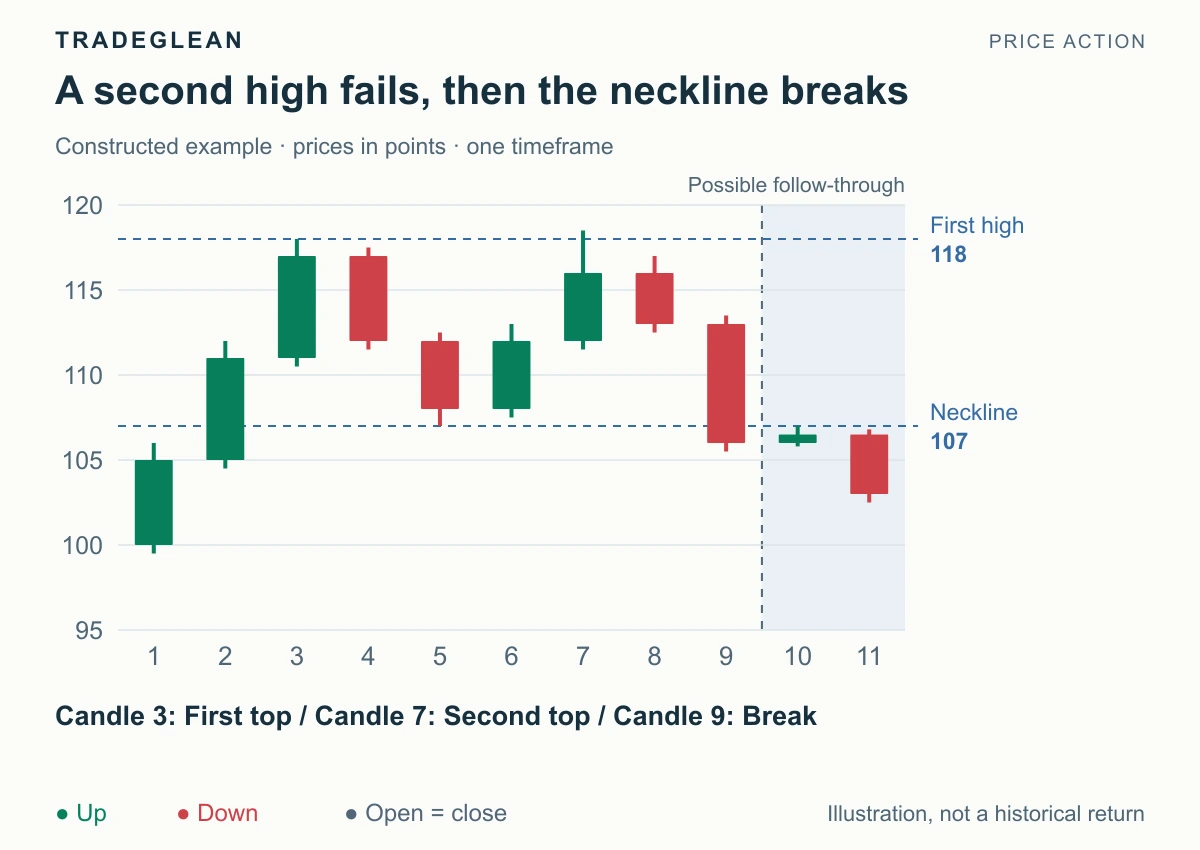
Recognize double tops and double bottoms, distinguish a second test from a completed reversal, and locate the neckline that confirms the direction.
Read article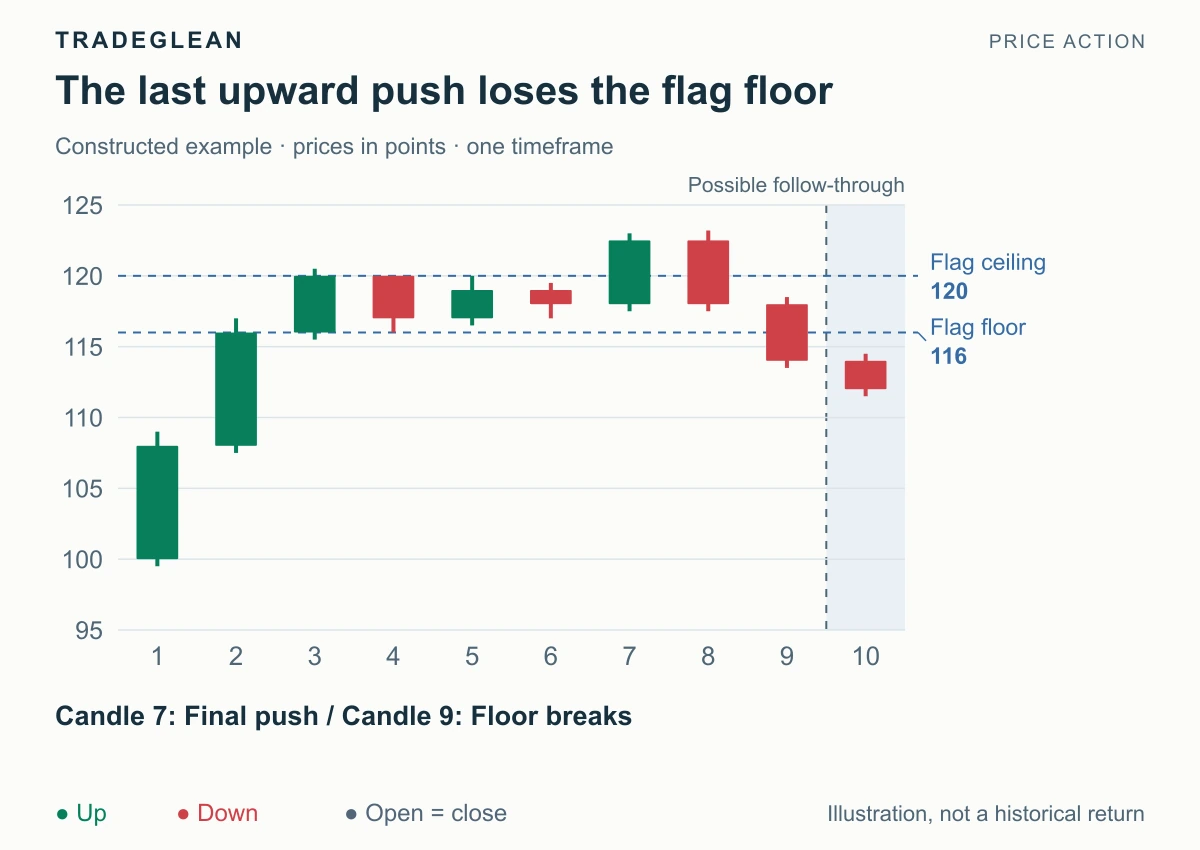
Recognize a final-flag reversal through a pause, one more trend extension, and a confirmed return through the flag's opposite boundary.
Read article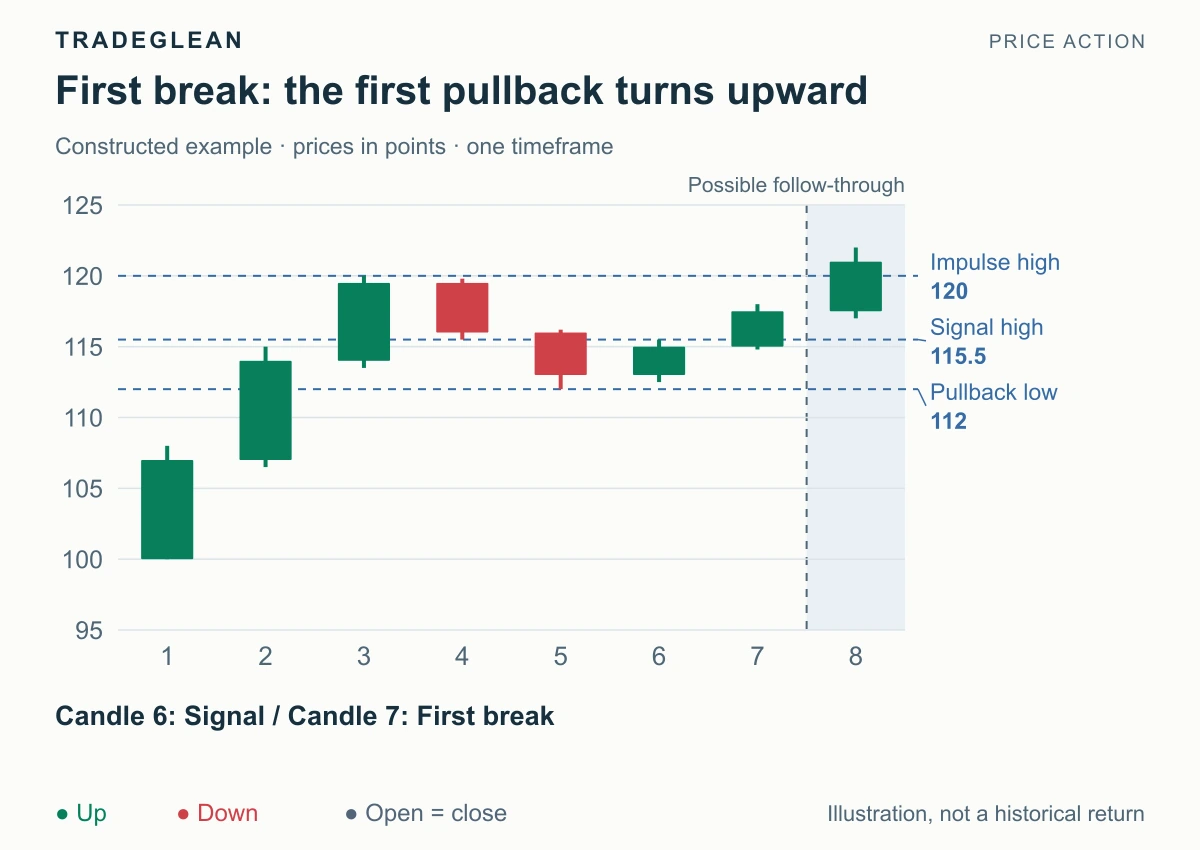
Distinguish FB and SB pullback setups, identify first and second trend-recovery attempts, and compare their confirmation, location, and failure boundaries.
Read article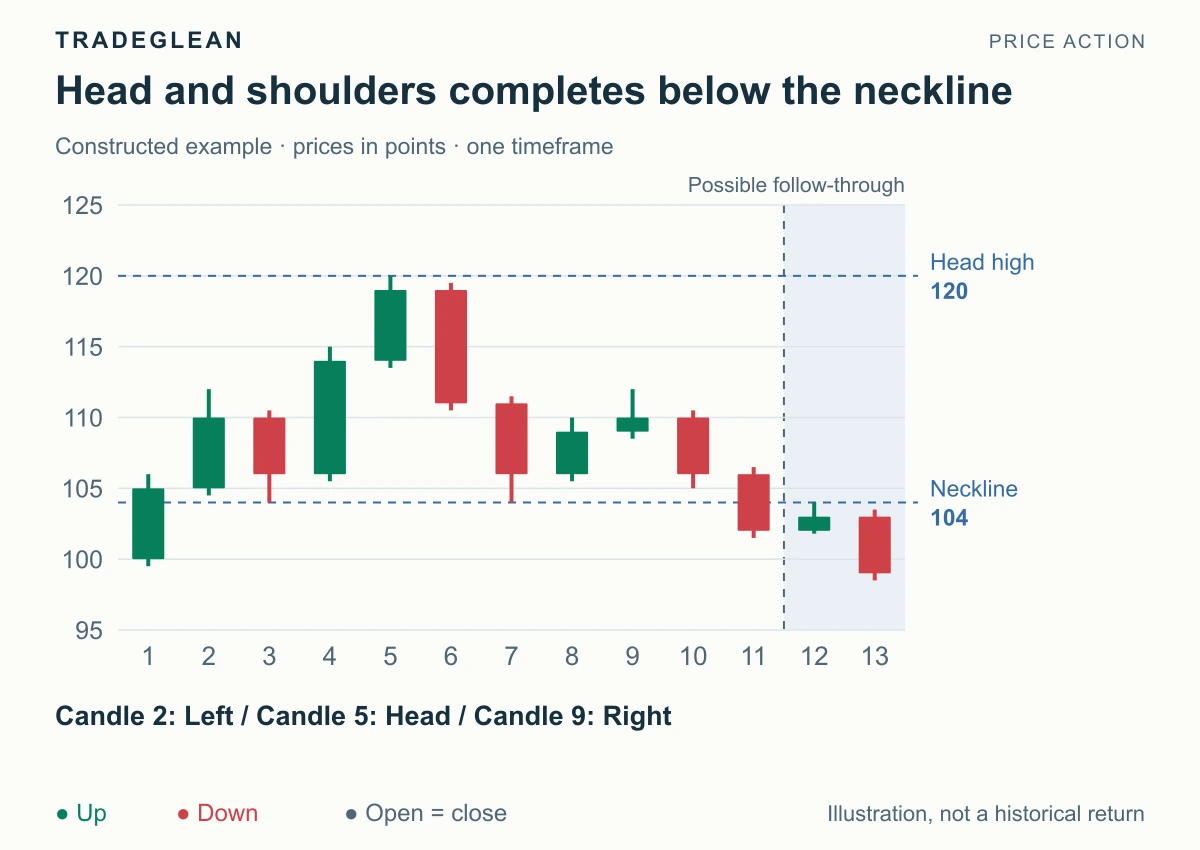
Identify head-and-shoulders tops and bottoms through their pivots and neckline, then distinguish the completed reversal from an unfinished outline.
Read article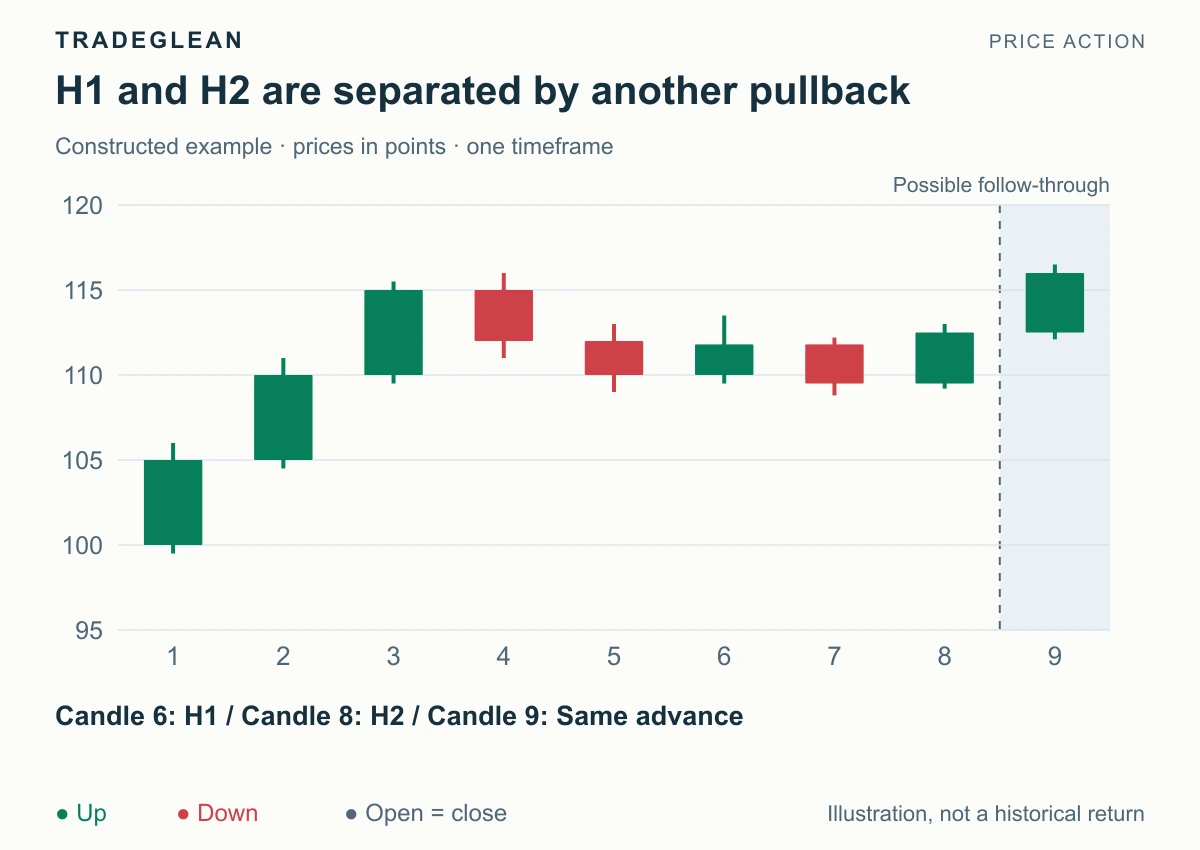
Learn to count first and second attempts to resume a trend, distinguish a trigger from a swing high, and reset the count when the pullback ends.
Read article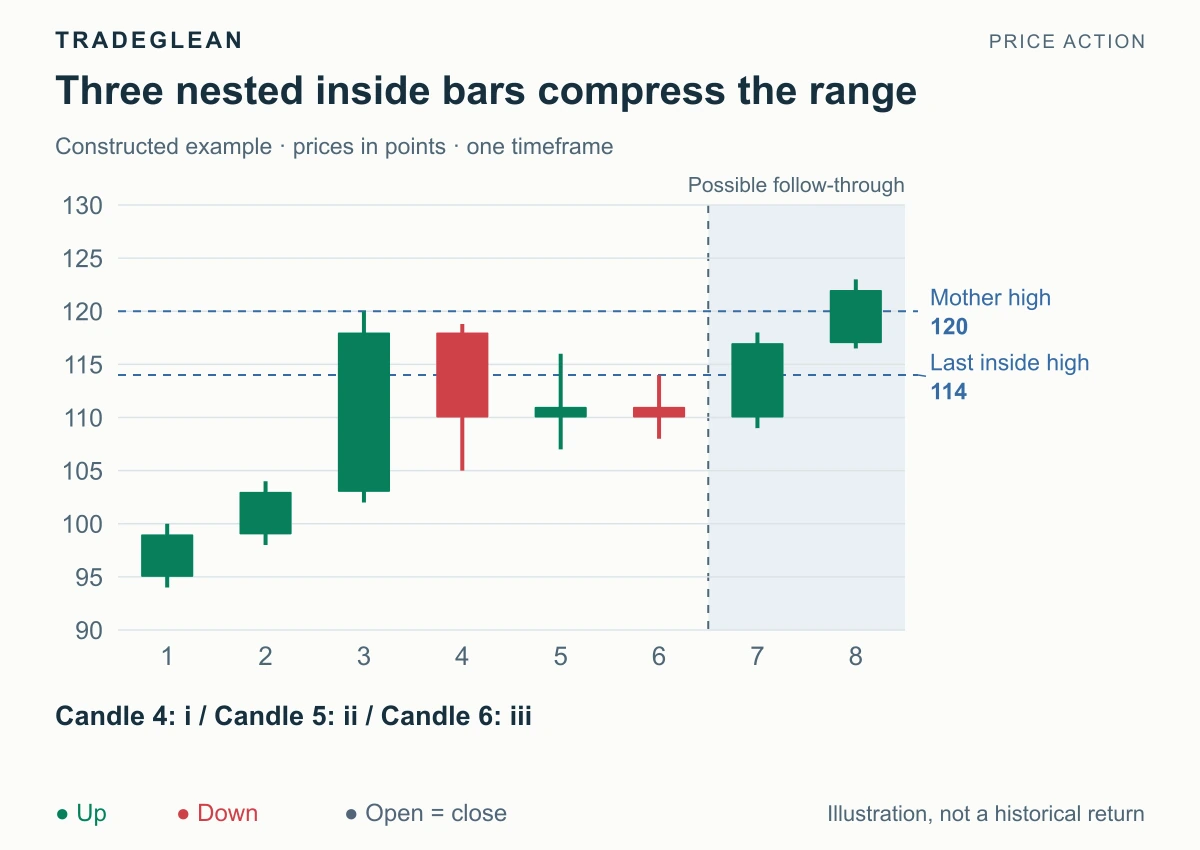
Count nested inside bars and inside-outside-inside sequences, mark their inner and outer boundaries, and connect a breakout to the surrounding trend.
Read article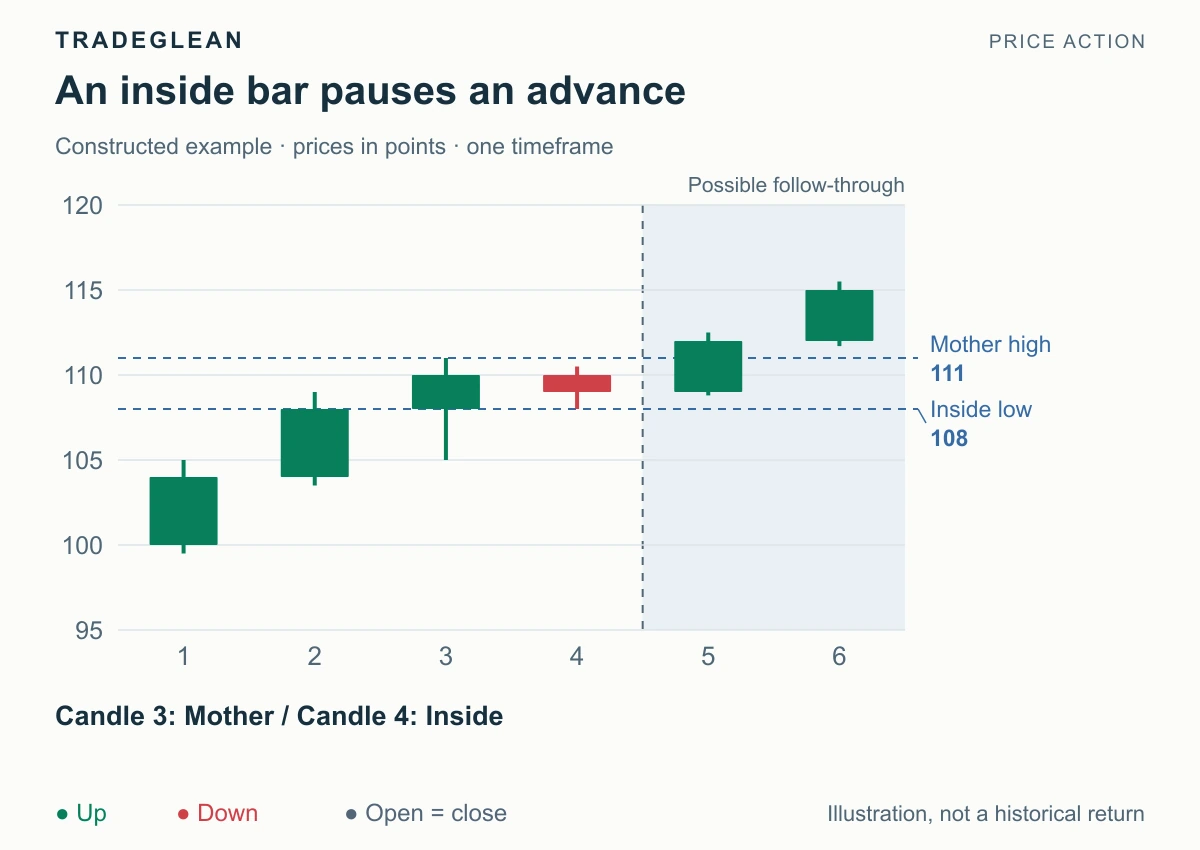
Identify inside and outside bars using complete highs and lows, distinguish them from body engulfing, and use context to choose a directional setup.
Read article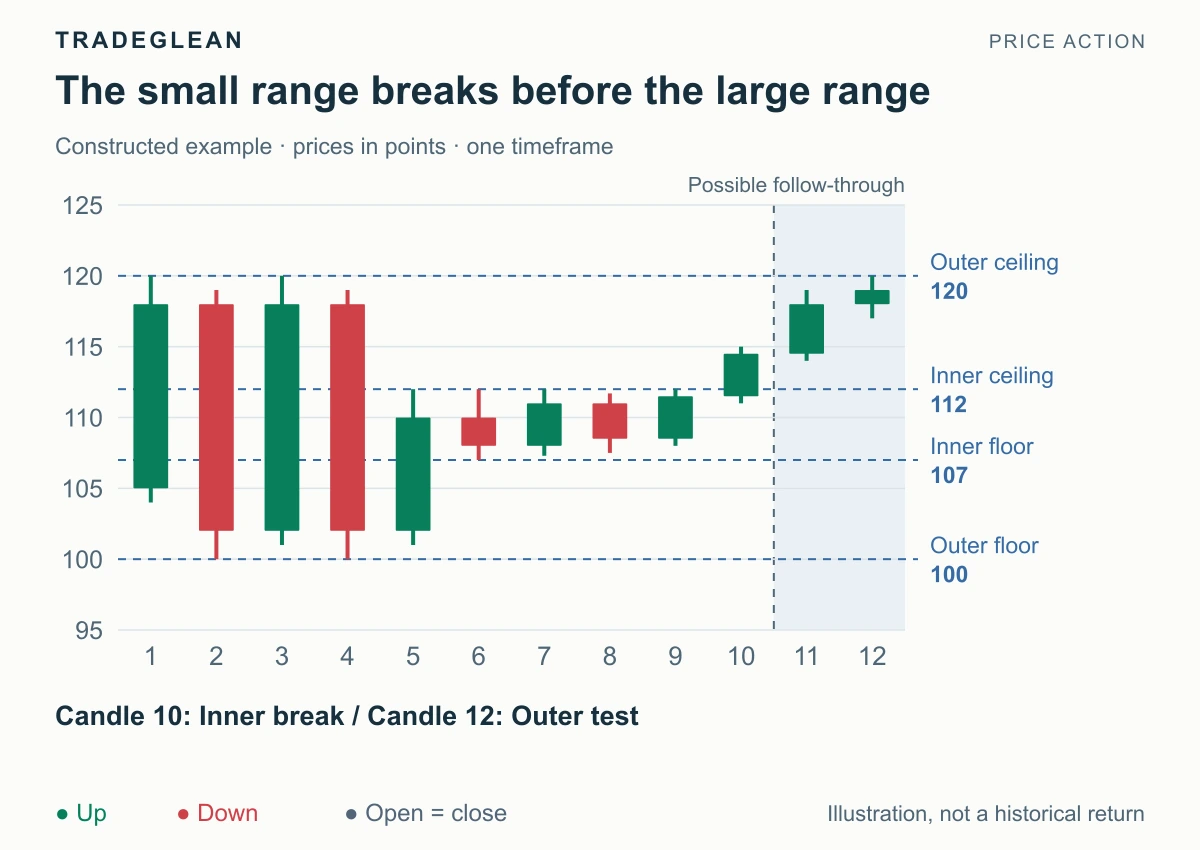
Recognize an inside range break, distinguish inner and outer boundaries, and use a shallow handle without mistaking it for a full range breakout.
Read article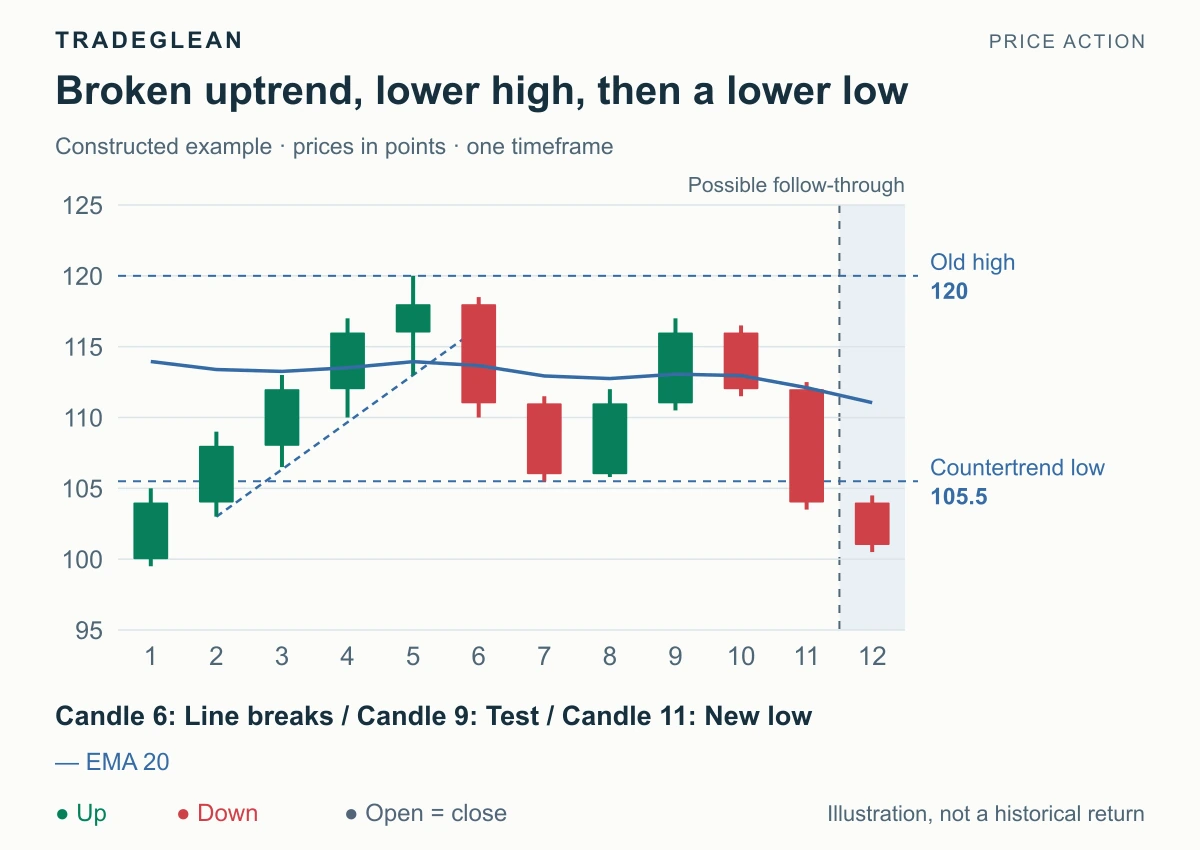
Identify a major trend reversal through a broken trend, a test of the old extreme, and renewed opposite movement, with a precise EMA gap-bar definition.
Read article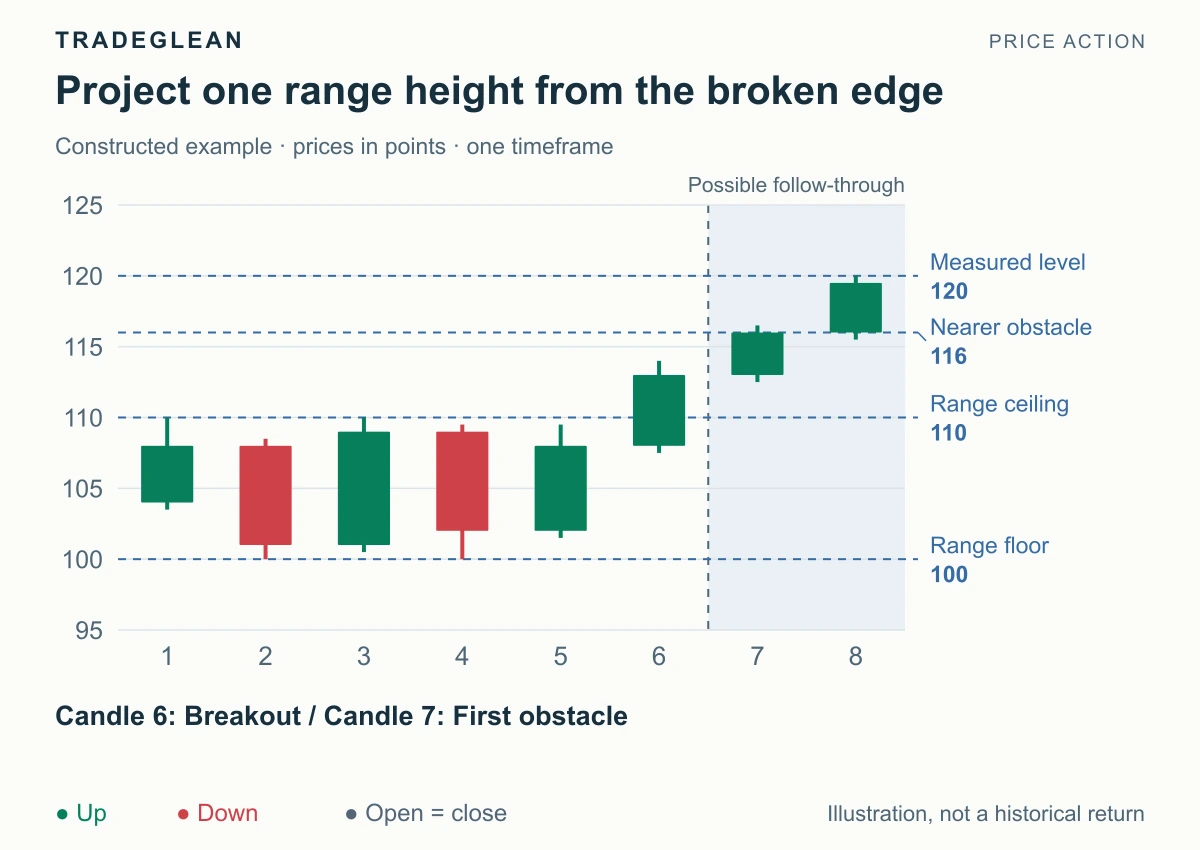
Calculate range-height, equal-leg, and head-height projections with clear starting points, then compare each target with the nearest visible obstacle.
Read article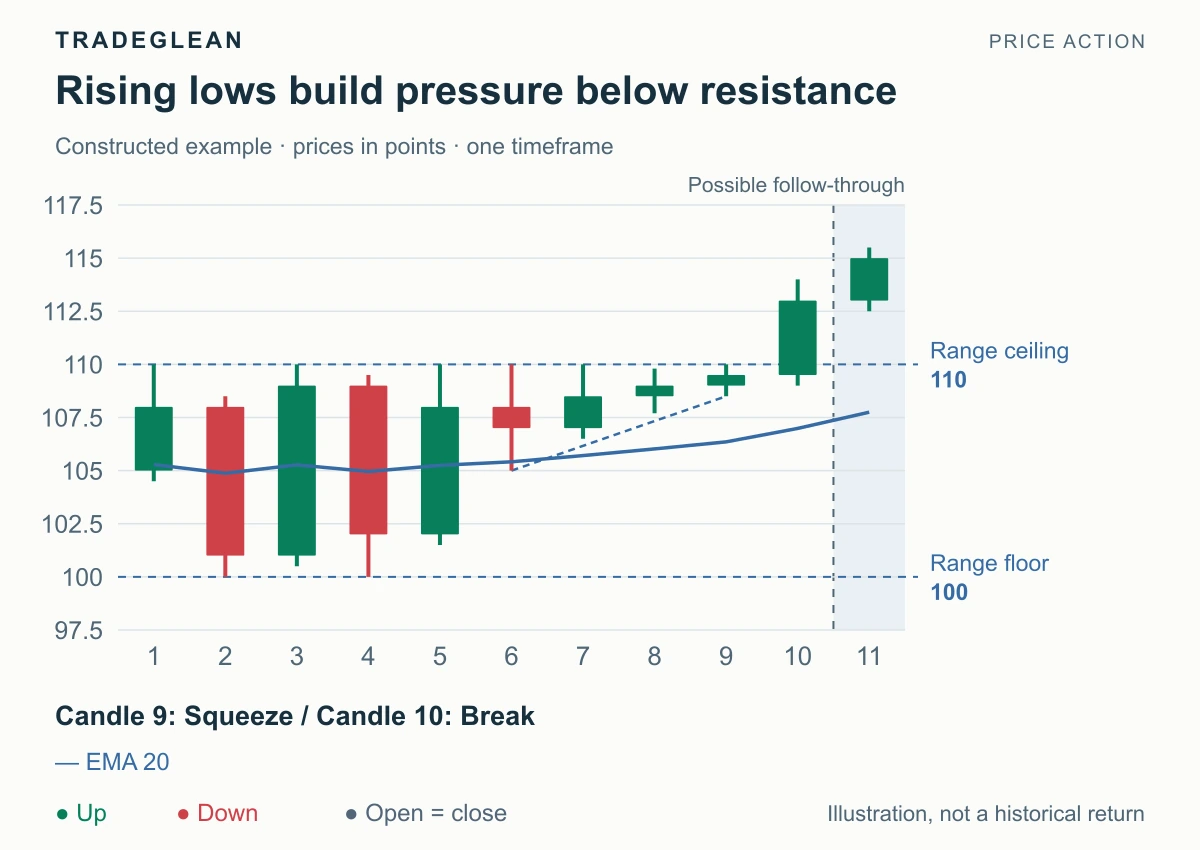
Identify a range-break squeeze, read rising lows or falling highs near the boundary, and separate the directional setup from a confirmed breakout.
Read article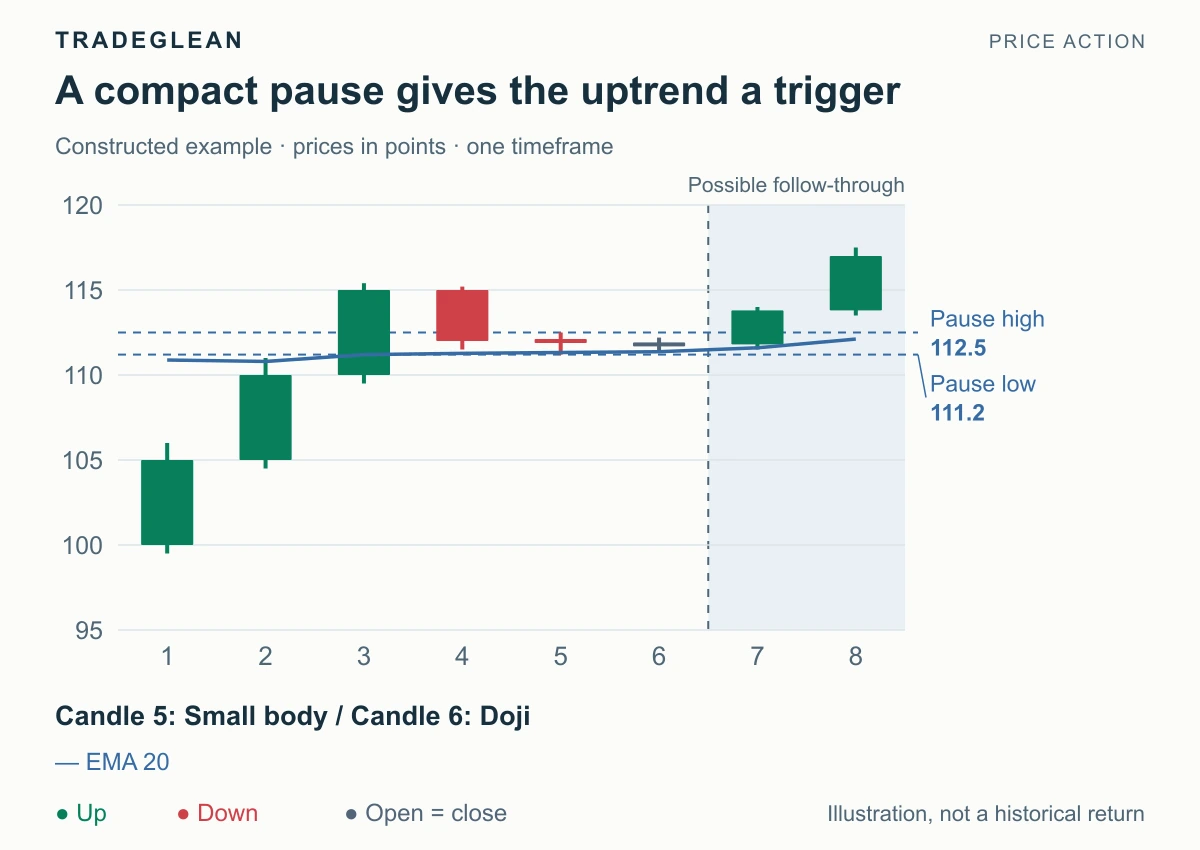
Recognize an orderly pullback in a strong trend, locate a compact pause, and wait for a closing break before treating it as a trend restart.
Read article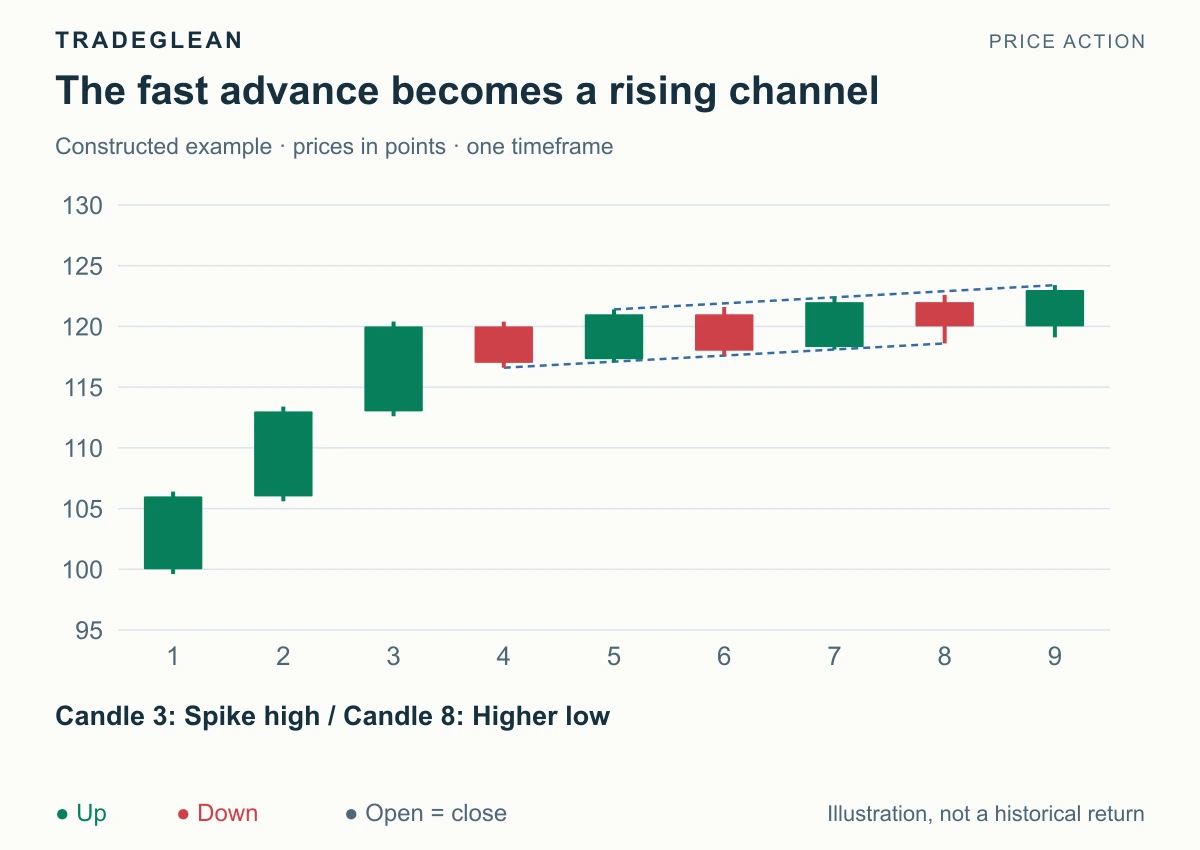
Distinguish a fast impulse followed by a channel from a trend built through successive ranges, and recognize when directional progress starts to weaken.
Read article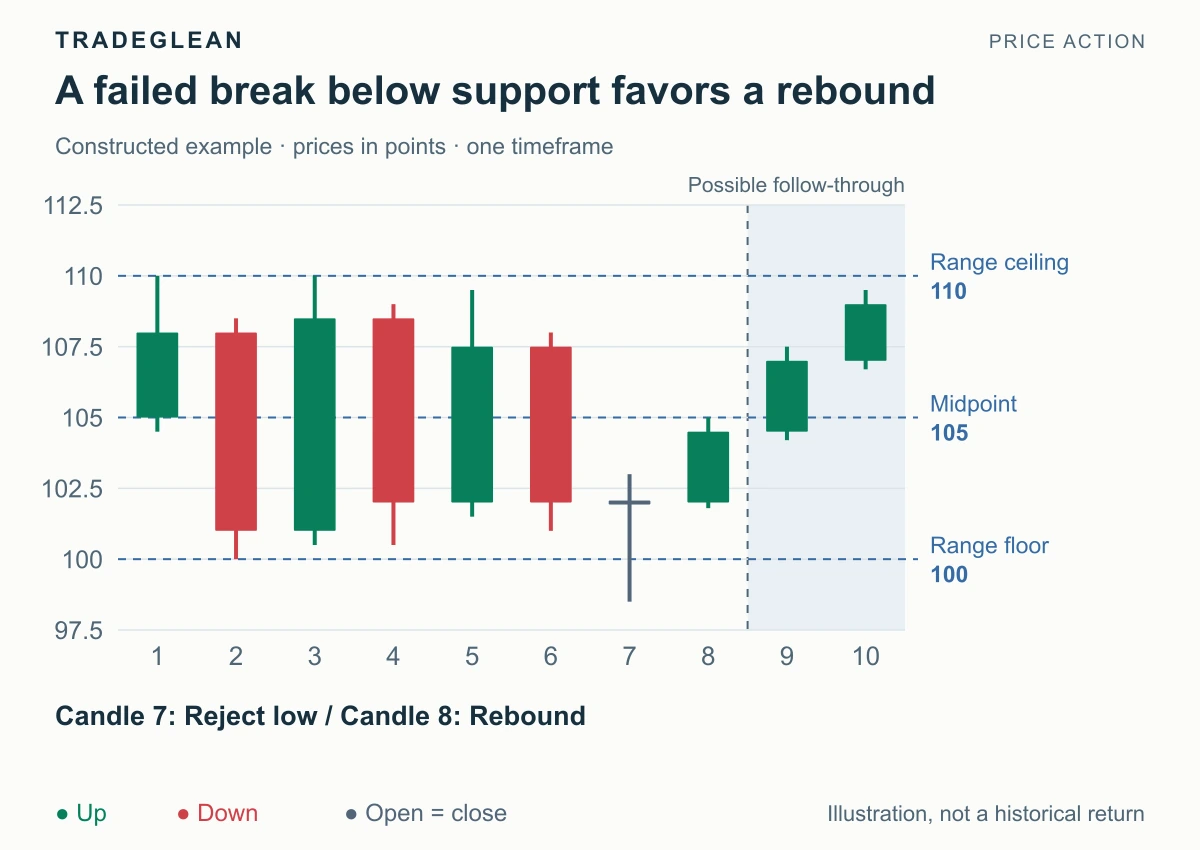
Identify a trading range, distinguish its edges from the middle, and read bullish rejections at the floor or bearish rejections at the ceiling.
Read article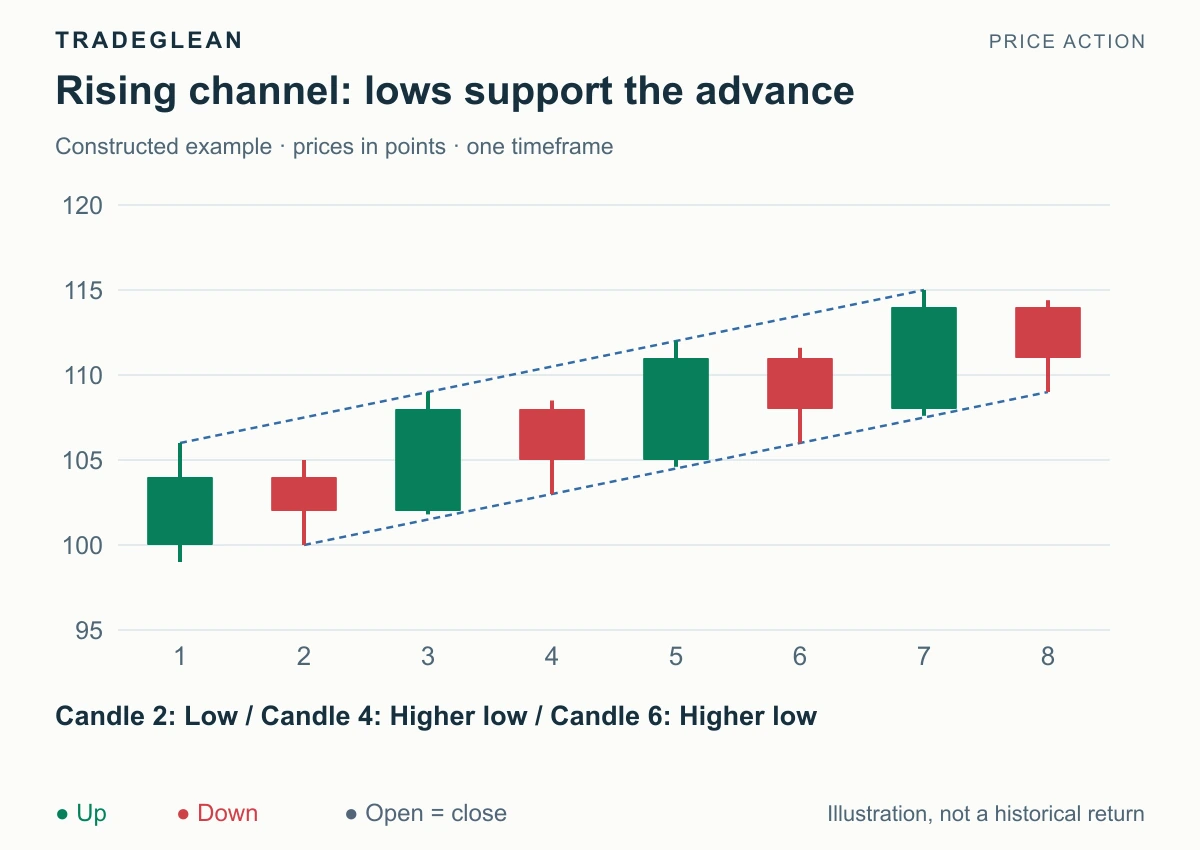
Identify rising and falling channels, distinguish trend lines from channel lines, and use shallow or deep pullbacks to judge the strength of a move.
Read article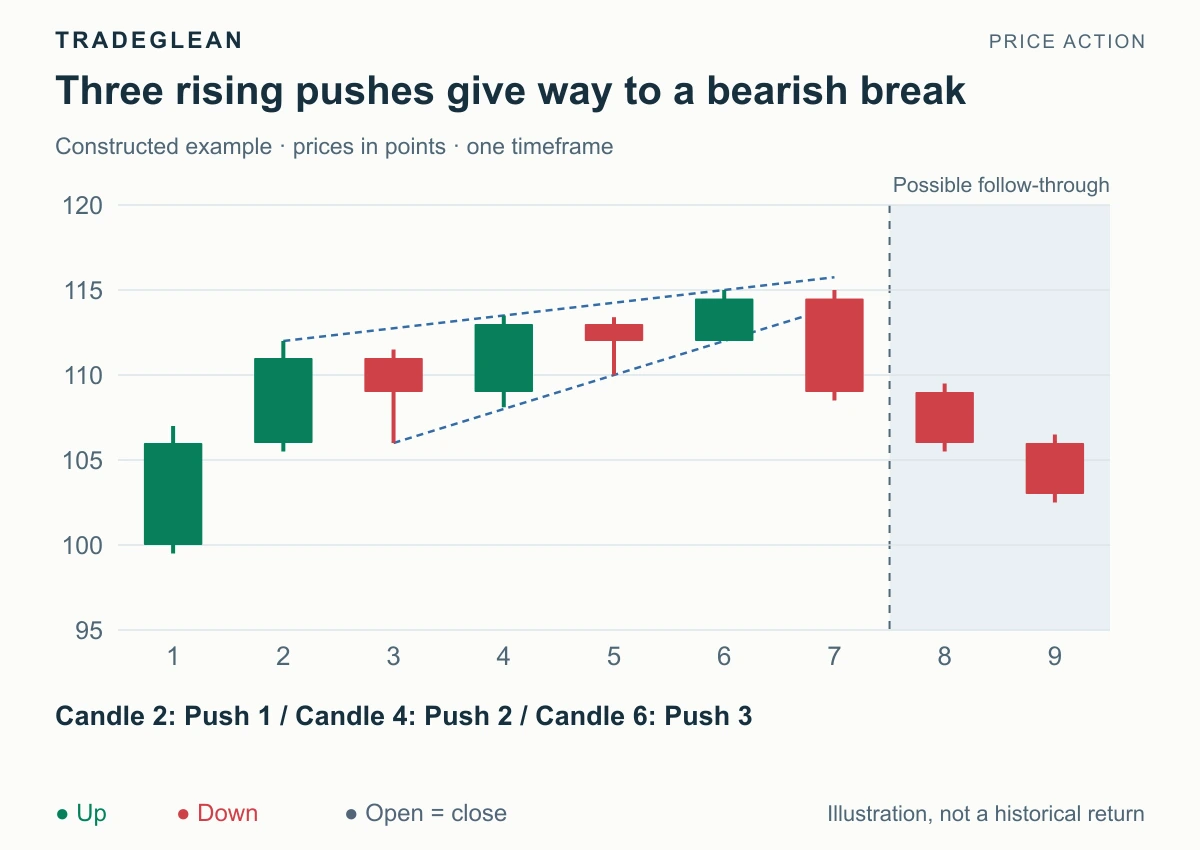
Identify rising and falling wedges, count three pushes with intervening pullbacks, and distinguish a confirmed reversal from a failed reversal attempt.
Read article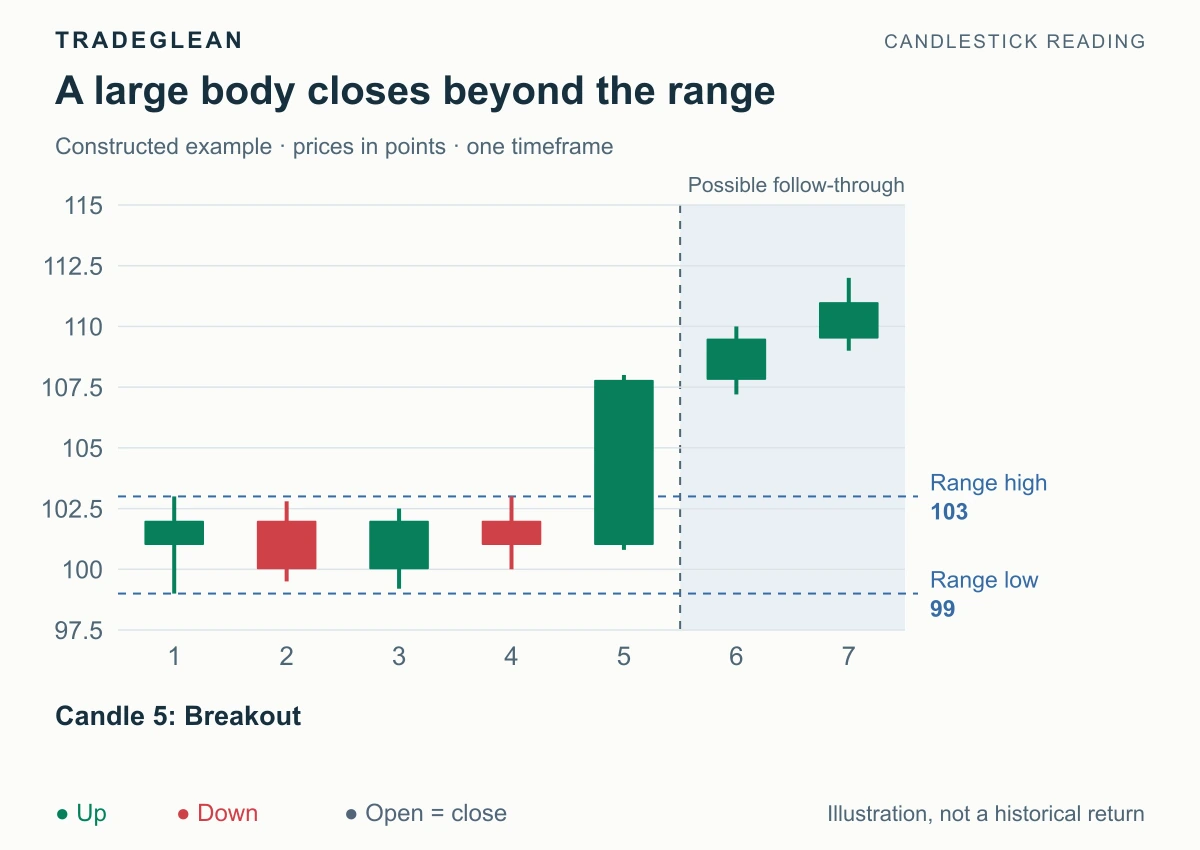
Learn what a breakout candle is, compare bullish and bearish closing breaks, spot wick-only attempts, and separate confirmation from an entry fill.
Read article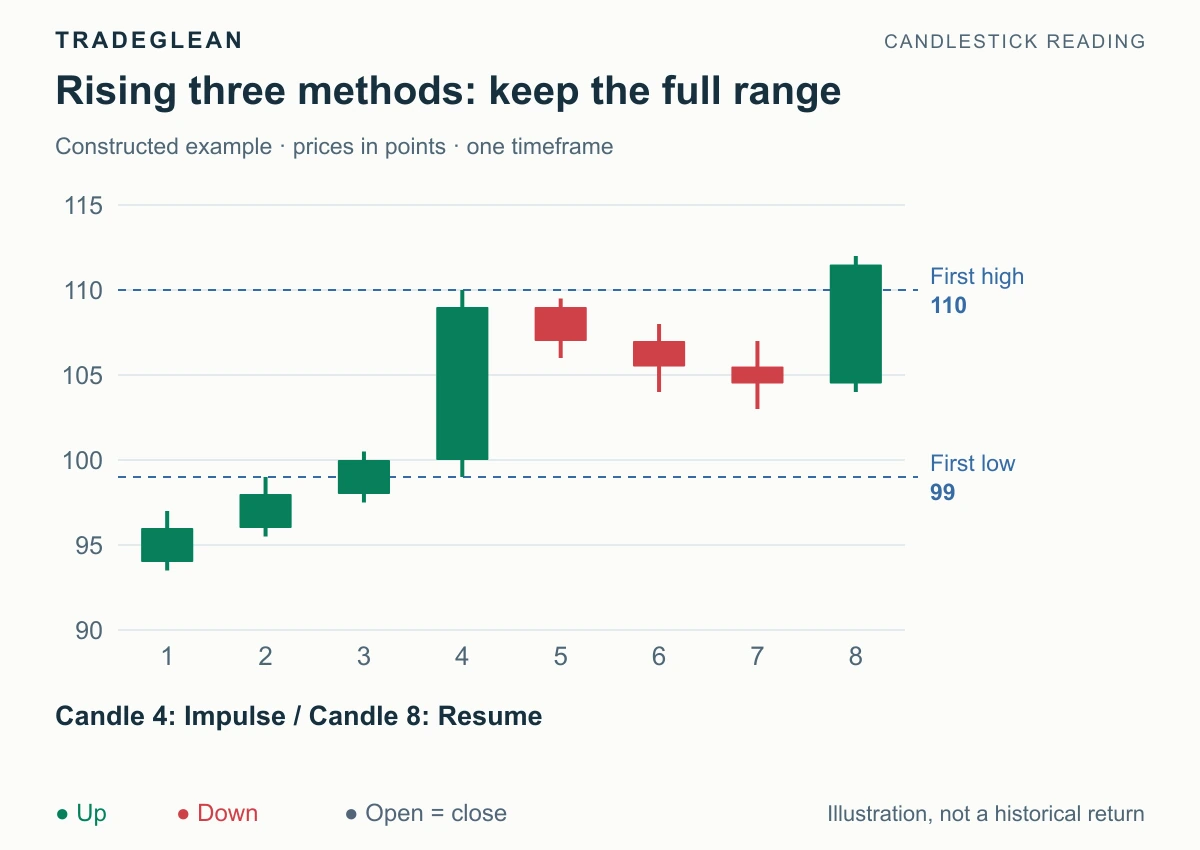
Identify the five candles of rising and falling three methods, check the pullback boundaries, and use the final close to read bullish or bearish continuation.
Read article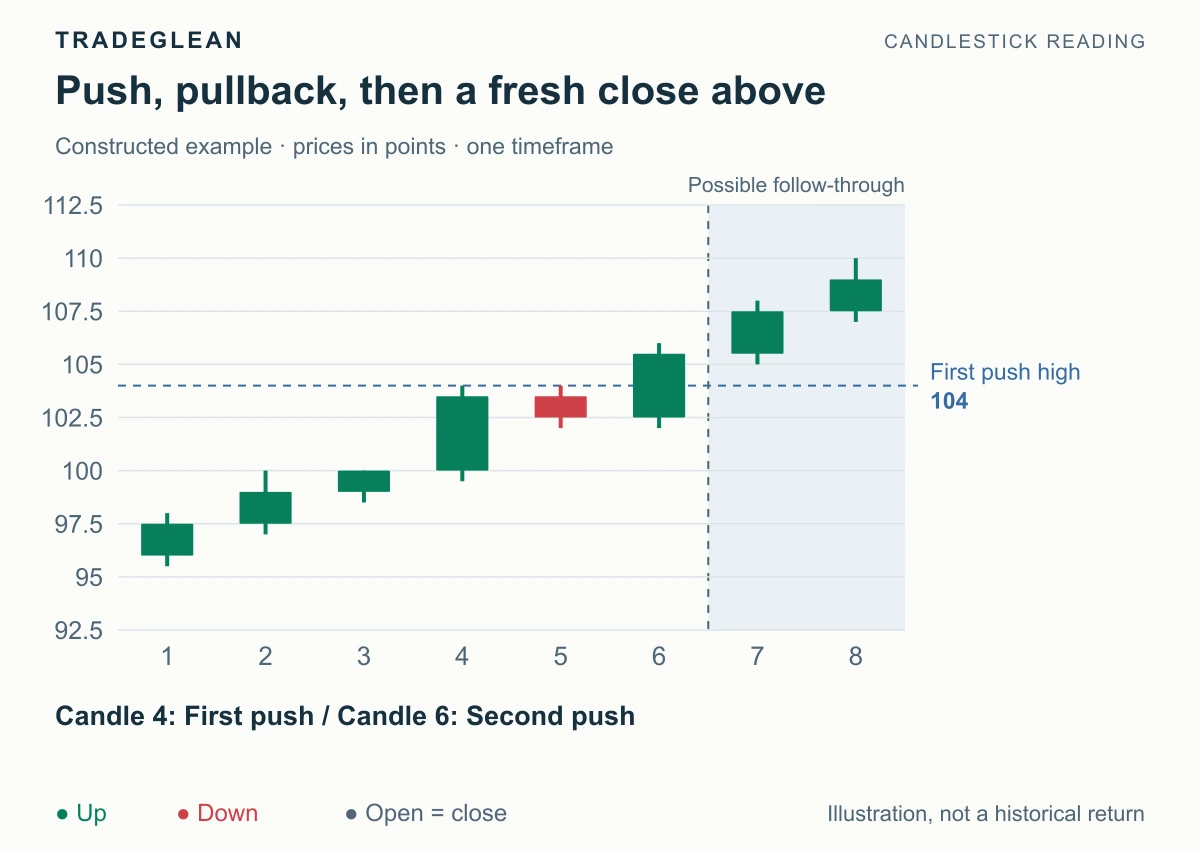
Recognize a push, contained pullback, and renewed push, then use green-red-green or red-green-red sequences to read bullish or bearish continuation.
Read article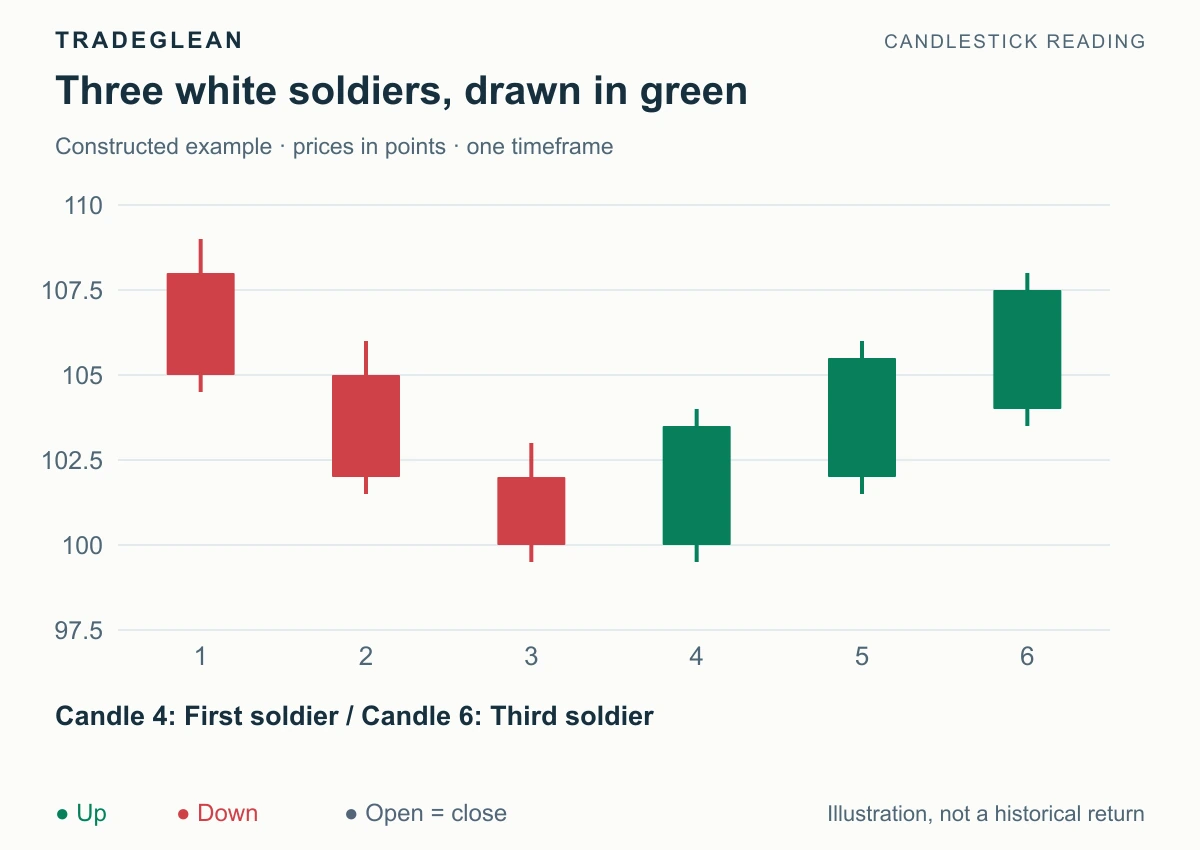
Identify three white soldiers and three black crows from their bodies, opens, and closes, then use the sequence to read bullish or bearish pressure.
Read article