Stops & exits
Paper Trading for Beginners: Practice a Plan and Review It
Use a simple paper-trading routine to record a setup, entry rule, cancellation point, costs, and review before risking real money.
Read articleConnect stop distance, position size, target space, and execution costs to a trading plan.
Stop distance and position size work together. Costs count too. Start with calculate stop distance and position size.
Browse all subjects →5 articles
Use a simple paper-trading routine to record a setup, entry rule, cancellation point, costs, and review before risking real money.
Read articleDistinguish a planned target ratio from average realized outcomes, calculate break-even win rates, and account for trading costs.
Read article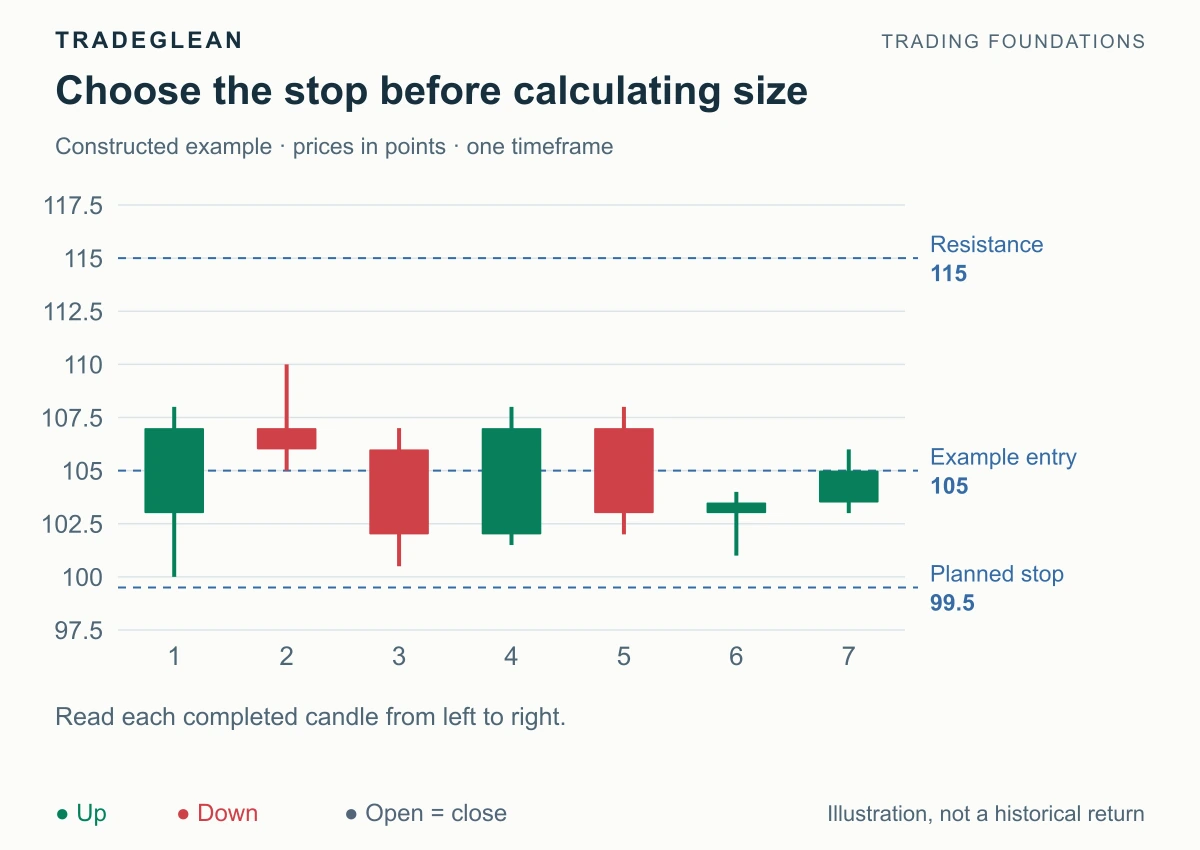
Choose a structural failure reference, translate its distance into money, and round quantity down without treating the stop as a loss guarantee.
Read article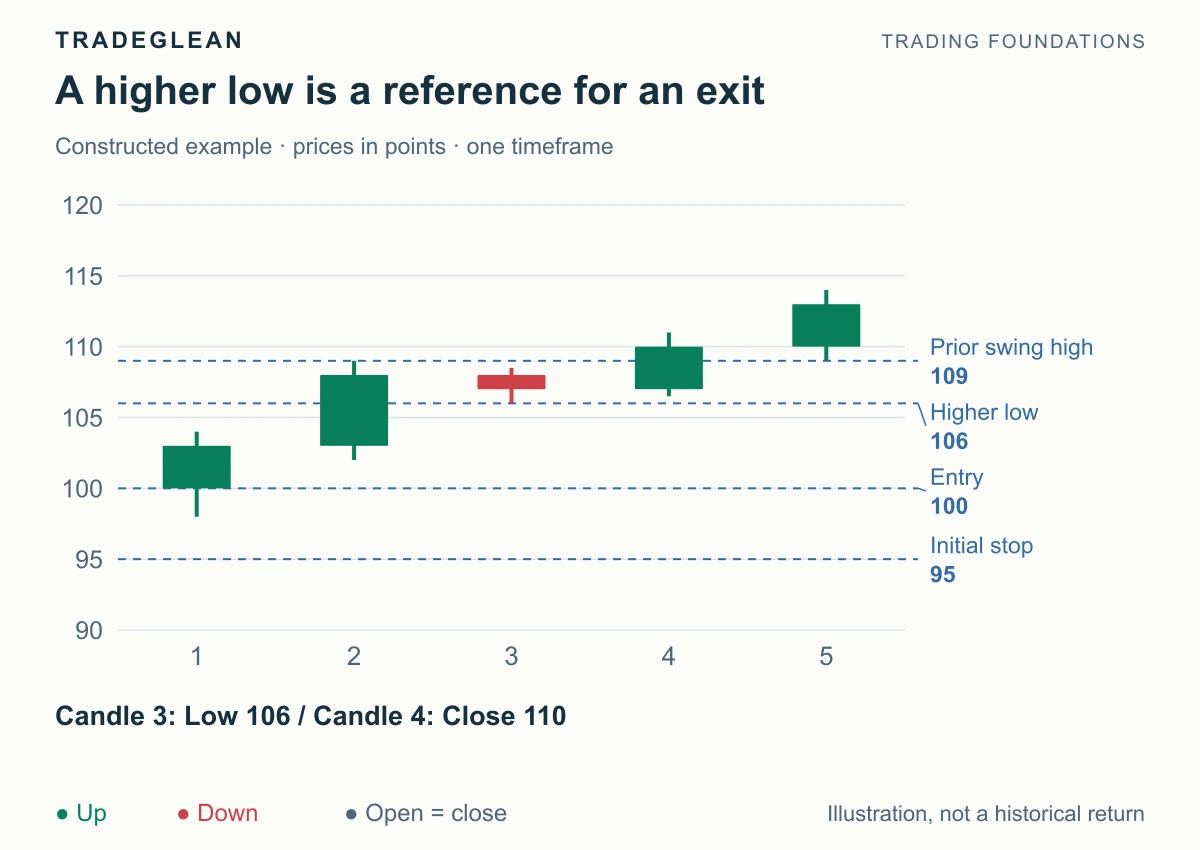
Compare three ways to exit a trade, calculate partial-position outcomes, and distinguish a normal pullback from a failed entry premise.
Read article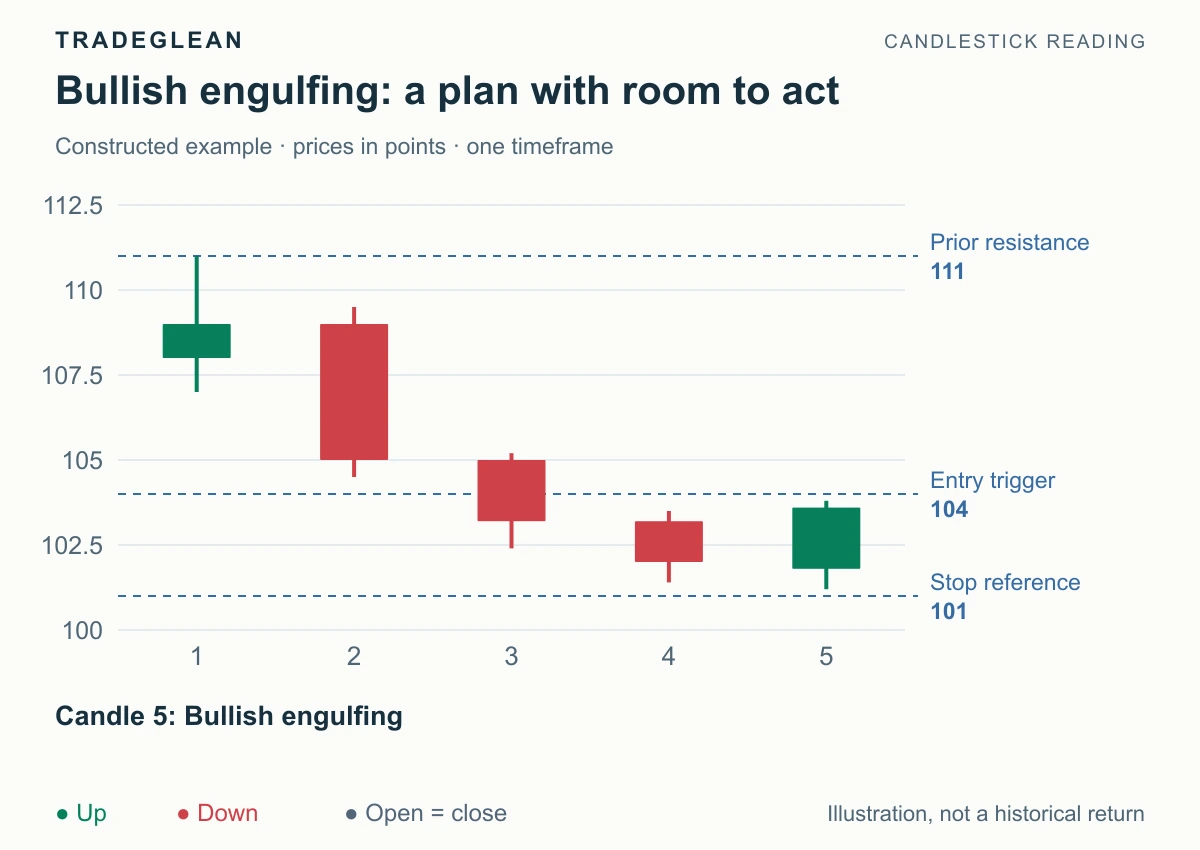
Turn a directional candlestick signal into a complete trading plan: identify the pattern, define an entry, set the failure boundary, and calculate size.
Read article